
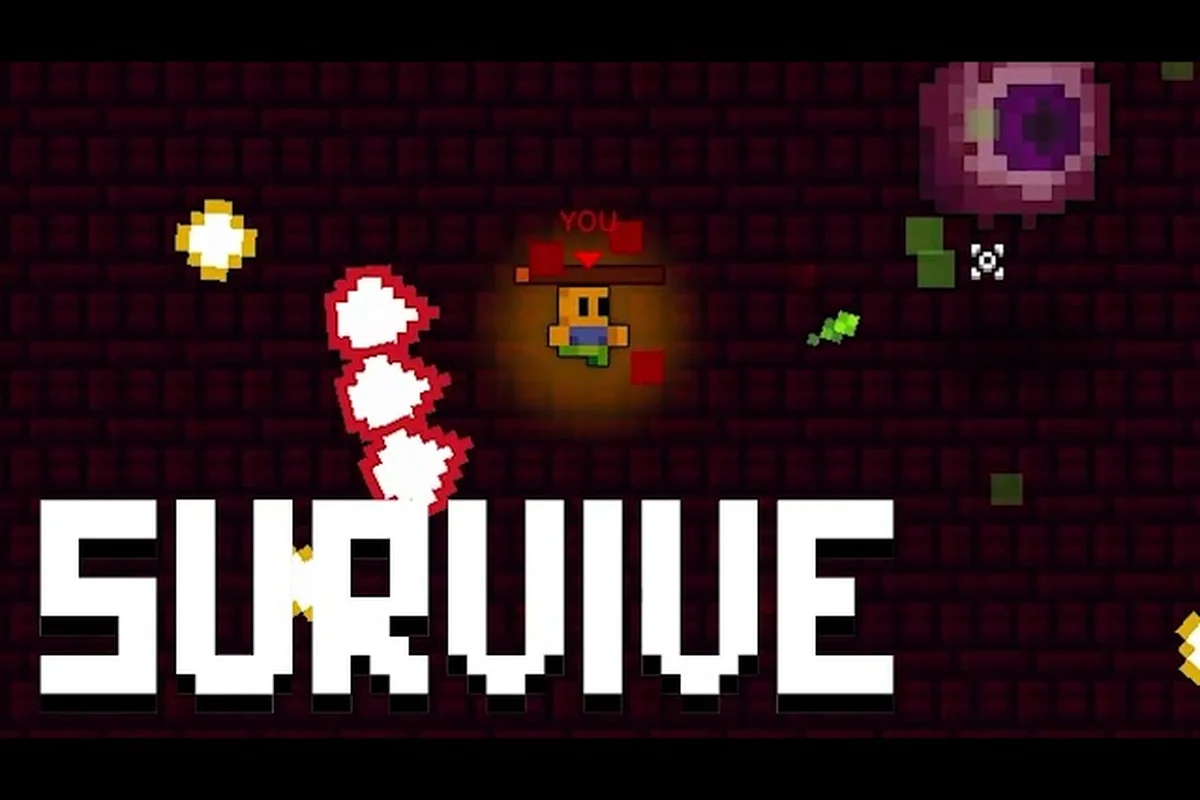
Pixel Quest how to play with friends is the question on every new Robloxian's mind after they take their first hit from a stray projectile in the 2D bullet-hell world. The game, which has racked up over 23.7 million visits and 338K favorites since its alpha release, throws you into a chaotic arena where dodging and teamwork determine whether you bank your Valor Tokens or lose everything to permadeath. Understanding co-op setup, core movement, and the bomb-throwing mechanic before you enter your first dungeon can mean the difference between a smooth progression session and an frustrating restart.
Co-op Setup and Party Mechanics
Getting your squad together in Pixel Quest is straightforward, but the game's alpha state means a few options work better than others. The official game page on Roblox confirms that clearing dungeons with friends is a core design pillar, and the developer has built the party system to support up to four players per instance. You can invite players through the Roblox friend menu, or use the in-game party board located near the spawn point in the hub area.
The party leader controls dungeon access, which means one person decides when the group enters a run. This matters because party-wide progression ties to the leader's unlocked content. If your friend has only cleared the first dungeon but you've unlocked three, you'll need to either let them lead or help them catch up first.
| Party Feature | Solo Play | Co-op Play |
|---|---|---|
| Max Players | 1 | 2-4 |
| Loot Distribution | All yours | Split by contribution |
| Valor Token Drops | Standard rate | Reduced per player |
| Revive Mechanic | None | 1 revive per player per dungeon |
| Difficulty Scaling | Fixed | Scales with player count |
Revive tokens are the most valuable co-op resource because permadeath is permanent. When a teammate falls, you have roughly ten seconds to reach their ghost and hold the interact button to bring them back. The catch is that the revive animation leaves you completely vulnerable, so you need one player providing covering fire while another performs the rescue.
Squad communication matters more than individual skill in this game. Since the alpha updates arrive every weekend, the meta shifts frequently, and groups that adapt together tend to clear content faster. The beginner guide covers the fundamentals of getting started if you need to bring a completely new player up to speed before your first group run.
Essential Controls and Movement
Pixel Quest how to play with friends starts with mastering the control scheme, because the game's bullet-hell combat punishes hesitation. The default layout uses WASD for movement, the mouse for aiming, and left-click to fire your equipped weapon. Spacebar handles dodging, which grants brief invulnerability frames that are essential for weaving through dense projectile patterns.
| Action | Default Key | Notes |
|---|---|---|
| Move | WASD | Eight-directional movement |
| Aim | Mouse | Crosshair follows cursor |
| Fire | Left Click | Hold for continuous fire |
| Dodge | Spacebar | 0.3s invulnerability window |
| Throw Bomb | Q | 2-second cooldown |
| Interact | E | Pickups, revives, levers |
| Map | Tab | Overlay map for dungeons |
The dodge mechanic deserves special attention because it separates good players from great ones. Each dodge covers roughly three character widths and leaves you vulnerable for a brief recovery frame at the end. Spamming dodge will get you killed faster than standing still, so you need to time your invulnerability windows against specific enemy attack patterns rather than reacting randomly.
Bomb throwing uses the Q key and functions as your panic button for crowd control. The projectile arcs toward your cursor position and explodes after a short fuse, dealing area damage that clears smaller enemies instantly. The 2-second cooldown means you cannot rely on bombs as your primary damage source, but they excel at breaking up dense clusters of projectiles that would otherwise corner you.
How to Throw Bombs Effectively
Party Formation and the 80+ Boss Roster
Pixel Quest's 80+ bosses scale their bullet-hell patterns based on party size, making formation critical. A balanced 4-player party should include one tank to absorb projectile aggro, two DPS classes for sustained damage, and one support for healing. Against bosses like those in the Corrupted Catacombs, the tank positions at the boss's spawn point while DPS players flank at 45-degree angles. This formation creates clear firing lanes and prevents friendly-fire overlap during dense projectile phases.
Solo vs Co-op Valor Token Farming Rates
Solo play in Pixel Quest yields 100% of Valor Tokens to the single player, but co-op splits tokens equally among party members. A 4-player party clearing a dungeon in 8 minutes earns each member 25 tokens, while a solo player clearing the same dungeon in 15 minutes earns 100 tokens. However, co-op parties can tackle higher-level dungeons earlier, potentially earning 50 tokens per 10-minute run. For token farming, solo runs are 2x more efficient; for dungeon completion and boss unlocks, co-op is faster.
The bomb mechanic in Pixel Quest is more nuanced than most players realize, and learning how to throw bombs properly will save your run more times than any weapon upgrade. When you press Q, your character lobs a bomb that travels in a parabolic arc toward your cursor. The explosion radius covers roughly three tiles, and the damage falls off from the center point.
Fuse timing is the critical skill here. Bombs detonate about 1.2 seconds after landing, which means you can use them for area denial rather than just direct damage. Toss a bomb at a choke point before you retreat through it, and the explosion will catch any enemies that try to follow. This technique works especially well in the Corrupted Catacombs, where narrow corridors funnel enemies into predictable lines.
| Bomb Technique | Best Used When | Difficulty |
|---|---|---|
| Direct Throw | Single tanky enemy | Easy |
| Area Denial | Choke points, retreats | Medium |
| Pre-emptive Toss | Boss spawn animations | Medium |
| Bounce Shot | Around corners | Hard |
| Combo Chain | Coordinated with dodge | Advanced |
The bounce shot is an advanced technique that veteran players use to clear rooms without exposing themselves. If you aim at a wall at the correct angle, the bomb ricochets once before landing, letting you hit enemies that are hiding behind cover. Community testing suggests the bounce angle mirrors at roughly 45 degrees, although the exact physics may shift with future alpha patches.
Combo chaining involves throwing a bomb, dodging into the explosion radius, and using your invulnerability frames to survive the blast while the enemies around you take full damage. This aggressive playstyle carries significant risk, but the payoff is clearing rooms in seconds rather than minutes. Practice this in the early overworld areas before attempting it in dungeons, because the timing window is tight.
Solo Play vs Co-op Strategy
Valor Token Banking in Co-op Parties
When a party member dies in Pixel Quest's permadeath system, unbanked Valor Tokens are lost with them. Before entering any of the 30+ dungeons, each player should visit the bank to convert earned tokens into permanent currency for cosmetics and power-ups. In a 4-player party, if one member holds 500 unbanked tokens and dies to a bullet-hell boss, the entire party loses that progression. Coordinate banking breaks between dungeon floors—this prevents a single death from erasing 20 minutes of collective farming.
Dodge-Roll Timing Against Bullet-Hell Patterns
The dodge-roll in Pixel Quest grants brief invincibility frames that are essential for surviving the 30+ dungeons' boss fights. Unlike basic movement, the roll has a 0.5-second cooldown and covers roughly 3 tile lengths. Against the Serpent Catacombs' final boss, which fires 8-projectile rings, time your roll to pass through the gap between rings rather than rolling away from the boss. Practice this timing in the first dungeon, where projectile speeds are 30% slower than later dungeons.
While Pixel Quest how to play with friends is the focus here, understanding the solo playstyle helps you become a better teammate. The game scales enemy health and projectile density based on your party size, which means solo runs feature fewer bullets but demand more personal responsibility. You have no one to revive you, so every mistake carries the full weight of permadeath.
The solo dungeon guide breaks down which dungeons are manageable without a party, but the general rule is that your first few clears should happen solo to learn boss patterns. When you understand the attack tells, you can contribute more effectively in co-op because you will not need constant revives.
Role specialization becomes viable in co-op because you have teammates to cover your weaknesses. A common setup involves one player focusing on tanking with high-defense gear while another handles damage output and a third manages crowd control with bombs. The game does not enforce classes, but the power-up system encourages specialization since you can stack similar upgrades.
| Strategy | Solo | Duo | Full Party |
|---|---|---|---|
| Aggressive Push | Risky | Viable | Recommended |
| Defensive Turtle | Safe but slow | Works | Slows clear speed |
| Bomb Spam | Ammo hungry | Balanced | Crowd control focus |
| Split Lanes | N/A | Covers more ground | Efficient farming |
| Boss Rush | High skill | Balanced | Fastest clears |
Valor Token banking becomes more complicated in co-op because the drop rate scales down per player. According to community reports, a solo player earns roughly 100% of standard Valor Tokens, while a four-person party splits the pool at about 60% per player. This means group farming is less efficient for individual progression, but the faster clear speeds often compensate for the reduced rates.
The valor explained guide covers the banking system in detail, but the key takeaway is that you should always deposit your tokens before attempting a new dungeon. Losing a full run because you wanted to push one more room is the most common new player mistake.
Dungeon Coordination and Communication
Clearing dungeons with friends requires more than just showing up with good gear. The dungeon key system gates access to harder content, and each player needs their own key to enter. This means you cannot simply follow a friend into a locked dungeon unless you have completed the prerequisite content yourself.
The early dungeons guide walks through the first few dungeons in detail, but the coordination principles apply across all content. Before you enter, assign roles for crowd control, boss damage, and revive priority. Knowing who handles adds during a boss fight prevents the chaos that ends most co-op runs.
Callout discipline is the difference between a smooth run and a wipe. When you see a dangerous projectile pattern forming, call it out immediately so your teammates can position correctly. The game has no built-in voice chat, so most groups use Discord or the Roblox party chat. Keep callouts short and specific: "Bomb left," "Dodge right," "Revive me" works better than full sentences.
Boss enrage timers add pressure to co-op runs because you cannot afford to play overly defensive. Most bosses in the 80+ roster have a soft enrage that increases projectile speed after a certain time threshold. This forces groups to balance safe play with aggressive damage output, and it is where coordinated bomb usage shines.
Frequently Asked Questions
How do I invite friends to my Pixel Quest party?
Open the Roblox friends menu while in the hub area and click the invite button next to your friend's name. They will receive a prompt to join your server. Alternatively, use the party board near the spawn point to create a public group that friends can join directly from their friend list.
Can I play Pixel Quest solo if my friends are offline?
Yes, the game fully supports solo play with adjusted difficulty scaling. Enemy health and projectile density decrease when you enter a dungeon alone, and you receive the full Valor Token drop rate. The solo dungeon guide recommends starting with the easiest dungeon to learn boss patterns before attempting harder content.
What is the best way to throw bombs in co-op?
Coordinate bomb throws with your team's positioning. The area denial technique works best in co-op because you can cover retreat paths while teammates focus on damage. Call out your bomb throws so teammates know not to dodge into the blast radius, and save combo chains for when you have clear communication.
How does permadeath work when playing with friends?
When you die in a dungeon, you lose your character and all unbanked Valor Tokens. Teammates can revive you within ten seconds of your death, but the revive animation leaves them vulnerable. If the whole party wipes, everyone loses their progress, which is why banking tokens before risky runs is essential.
Does the game have cross-platform co-op?
Pixel Quest runs on Roblox, which supports cross-platform play across PC, mobile, and console. The controls adapt to your platform, but the co-op mechanics remain identical. Mobile players may find the bomb-throwing mechanic more challenging due to touch controls, so consider that when forming your party.